


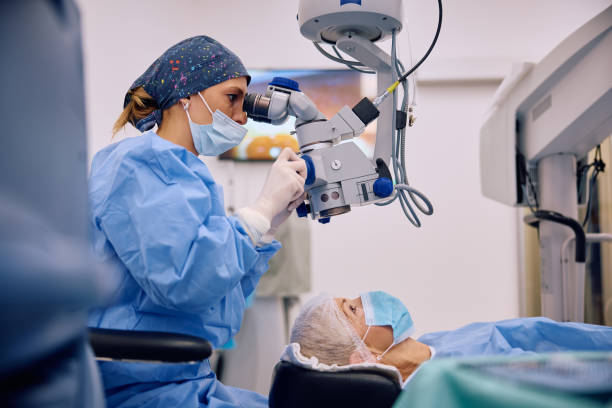
Cataract care has changed dramatically in recent years, not only because surgical tools have advanced, but because patient expectations have evolved as well. People no longer think of cataract treatment as simply restoring basic vision. They often want sharper clarity, reduced dependence on glasses, and a recovery that fits smoothly into modern routines. This shift makes the choice of an eye doctor more important than ever.
Before we move further, in our previous post, we discussed “Wearables Designed for Stronger Sessions,” where we aimed to provide valuable insights to help our readers enhance their performance and overall experience. We hope that the information proved useful and informative. Now, we are shifting our focus to an equally important aspect of health—cataract treatment, where this guide will offer essential knowledge to help you make informed decisions about your eye care.
An ideal cataract specialist today combines clinical mastery with a thoughtful approach to planning, communication, and safety. The goal is not just a technically successful operation, but a predictable, comfortable experience with outcomes aligned to each patient’s lifestyle.
Advanced Clinical Expertise and Consistent Surgical Outcomes
An ideal eye doctor for cataract treatment is defined first by depth of expertise and consistency of outcomes. Cataract surgery may be common, but it is not the same for every person. Differences in cataract density, corneal shape, pupil behavior, and coexisting conditions can influence surgical difficulty and visual results. A doctor with extensive cataract experience recognizes these variables early and plans for them proactively.
Beyond experience, it is the discipline of measurement, decision-making, and surgical precision that sets a top doctor apart. The ideal specialist can explain the rationale behind lens selection and surgical technique in a way that feels grounded in evidence rather than sales language. That combination of skill and clarity builds trust and increases the likelihood of a result that matches what the patient expects.
Patient-Centered Consultation and Transparent Decision-Making
The consultation process is where modern cataract care truly begins. An ideal eye doctor takes time to learn how a patient uses their vision at work, at home, and for hobbies. Reading, driving at night, screen time, and outdoor glare are not minor details; they directly influence which intraocular lens and correction strategy is most appropriate.
Transparency also matters, especially in an era when clinics may advertise premium technologies aggressively. The right doctor discusses benefits and tradeoffs carefully, and sets realistic expectations about spectacle dependence, halos, contrast sensitivity, and healing time. Patients searching for the best cataract surgeon in Vadodara often discover that the most trusted specialists stand out not only for surgical ability, but for how clearly they help patients choose what fits their needs rather than what sounds most advanced.
Mastery of Modern Diagnostics and Personalized Surgical Planning
Today’s cataract treatment depends heavily on accurate diagnostics and the integration of advanced vision correction methods to achieve precise outcomes. An ideal cataract doctor uses advanced testing to evaluate the cornea, retina, tear film, and biometric measurements that guide lens selection. Precision matters because even small errors can affect clarity and reduce satisfaction after surgery, especially when patients choose lenses designed to reduce glasses use.
Equally important is personalization. The best doctors treat planning as a tailored process rather than a standardized template. They identify issues such as dry eye, astigmatism, or early retinal disease and address them before surgery to protect outcomes. When the plan is individualized, the surgery becomes more predictable, and patients feel confident that their eyes are being treated as unique rather than routine.
Commitment to Safety, Sterility, and Risk Management
Cataract surgery is very safe overall, yet the ideal eye doctor never becomes casual about risk. Excellence in cataract care includes strict attention to sterility protocols, careful control of infection risk, and meticulous surgical preparation. A high-quality clinic environment supports that standard through trained staff, well-maintained equipment, and consistent processes that reduce variability.
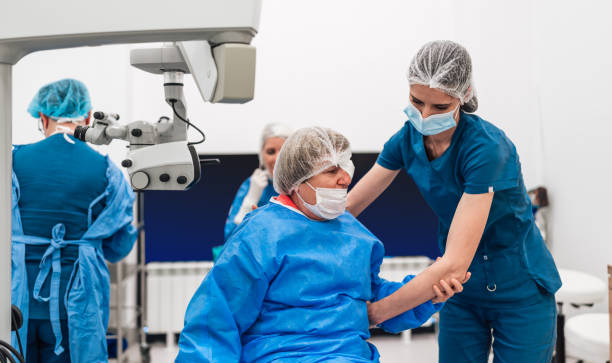
Risk management also includes knowing when to slow down. Some patients have complex needs, such as diabetes, small pupils, weak lens support, prior eye surgery, or glaucoma. The ideal doctor identifies these risks early, explains them respectfully, and adapts technique accordingly. Patients feel more secure when their doctor treats safety as a priority, not an assumption.
Skill in Lens Technology and Astigmatism Management
Intraocular lens options have expanded, and with them the need for thoughtful guidance. An ideal cataract specialist is comfortable with monofocal, toric, and multifocal or extended depth-of-focus lenses, and explains who benefits most from each option. The goal is to match the lens to the patient’s daily visual demands rather than promoting a single “premium” path for everyone.
Astigmatism management is another hallmark of modern cataract excellence, particularly when combined with lens removal surgery to achieve optimal visual outcomes. Ideal doctors evaluate the source and stability of astigmatism and recommend appropriate solutions such as toric lenses or corneal correction when needed. They also discuss what patients may still need afterward, because even the best lens technology does not guarantee total freedom from glasses in every situation.
Excellent Communication, Comfort, and Post-Operative Support
Cataract surgery is brief, but the patient experience spans weeks, from evaluation to recovery and final visual stabilization. An ideal eye doctor communicates clearly before surgery, prepares patients for what they will feel on the day of the procedure, and describes recovery in practical terms. When people understand what is normal and what is not, anxiety decreases and compliance improves.
Post-operative support is equally essential. The ideal practice provides easy access for follow-up questions, monitors healing closely, and catches early issues such as inflammation, eye pressure changes, or dryness that can blur vision. Patients also appreciate doctors who refine the plan if needed, whether that means adjusting drops, treating the ocular surface, or recommending a final glasses prescription at the appropriate time.
Conclusion
The ideal eye doctor for cataract treatment today is not defined by technology alone, nor only by the number of surgeries performed. True excellence comes from the combination of precise diagnostics, thoughtful planning, skilled execution, and patient-focused communication. When these elements work together, cataract care becomes more than a procedure; it becomes a reliable path to clearer vision designed around real life.
Choosing the right doctor means looking for professionalism, transparency, and a commitment to safety and follow-up. With the right specialist, patients can feel confident that their cataract treatment is guided by both modern capability and careful medical judgment, leading to outcomes that are not only successful but genuinely satisfying.