


Early childhood is a phase of boundless curiosity, imagination, and discovery. During these formative years, the way children explore the world shapes not only their immediate learning but also their lifelong attitude toward acquiring knowledge. Encouraging exploration through play is one of the most effective approaches to nurturing intellectual, emotional, and social growth. Play is more than just fun; it is a vital medium for developing creativity, problem-solving abilities, and cognitive flexibility.
Encouraging Curiosity and Exploration
When children are allowed to engage with their surroundings in playful ways, they develop a natural inclination to ask questions, experiment, and test ideas. This kind of learning fosters curiosity in a manner that traditional instruction often cannot achieve. Play activities such as building blocks, role-playing, or nature walks offer opportunities for observation, reasoning, and reflection, which are crucial for brain development.
Cognitive Growth Through Interactive Activities
Interactive activities stimulate the brain by encouraging children to think critically and make connections between concepts. Puzzle-solving, memory games, and hands-on experiments strengthen attention span and memory retention. Schools like Chitrakoota montessori elementary school in Bangalore integrate such experiences, allowing children to thrive in structured yet playful settings.
Emotional and Social Understanding
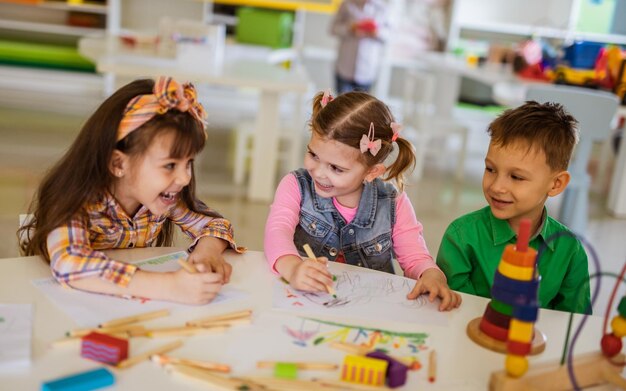
Participating in group games or cooperative play helps children develop empathy, patience, and teamwork skills. Understanding emotions, both their own and those of others, becomes easier when children navigate social interactions in a safe and playful environment. This emotional literacy contributes to resilience, adaptability, and the ability to manage conflicts effectively as they grow older.
Creativity and Imaginative Play
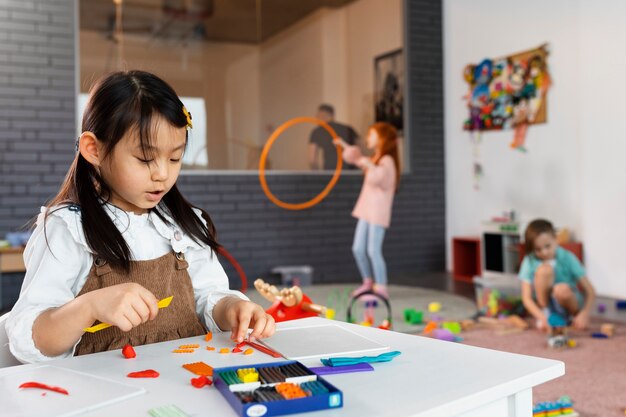
Imagination is one of the most powerful tools for a child’s development. Activities like storytelling, painting, or building imaginative scenarios help children think outside the box and explore multiple solutions to a single problem. Encouraging such exercises can significantly enhance learning excellence, fostering innovative thinking and artistic expression.
Physical Development and Coordination
Play is not just a mental exercise; it’s a physical one too. Activities that involve running, jumping, climbing, or balancing improve coordination, motor skills, and overall physical health. These experiences not only build confidence but also encourage children to take measured risks and challenge themselves safely. Integrating movement into learning ensures that children are engaged both mentally and physically.
Learning Through Sensory Experiences
Sensory play, which includes tactile, auditory, and visual experiences, enhances a child’s ability to process information and understand their environment. Through activities like water play, sand exploration, or sound-based games, children refine fine motor skills, develop spatial awareness, and improve focus. Sensory learning also encourages experimentation and observation, supporting skill development in early learners.
The Role of Guided Play
While free play is essential, guided play allows children to learn within structured environments that promote intentional skill-building. In such scenarios, educators introduce materials or prompts that challenge thinking while allowing autonomy. This method ensures children receive tailored support that fosters confidence and skill acquisition, preparing them for future academic challenges.
Integration of Academic Concepts in Play
Play can be a vehicle for introducing early academic concepts such as numbers, letters, shapes, and scientific principles. Simple activities like counting games, nature scavenger hunts, or interactive experiments help children understand foundational subjects in an enjoyable and memorable manner. The approach reduces the pressure associated with formal learning and encourages children to embrace education with enthusiasm.
Nurturing Lifelong Skills
When children are encouraged to learn through play, they naturally acquire critical life skills. They develop persistence, strategic thinking, adaptability, and collaboration, which are fundamental to success in both personal and professional spheres. Learning experiences embedded in enjoyable activities make these skills intuitive rather than imposed, leading to deeper internalization and confidence.
The Importance of a Supportive Environment
A nurturing and stimulating environment amplifies the benefits of playful learning. Schools and educators that provide thoughtfully designed spaces and activities help children explore freely while maintaining focus on developmental objectives. Facilities that emphasize holistic growth, such as Chitrakoota montessori elementary school in Bangalore, provide children with opportunities to pursue learning excellence while encouraging skill development through playful experiences. The combination of dedicated guidance and freedom to experiment allows children to thrive academically, socially, and emotionally.
Encouraging Family Participation
Learning through play is not limited to the classroom. Families can extend these experiences at home by creating playful learning opportunities that are engaging and educational. Activities like cooking, gardening, or family board games allow children to apply problem-solving and critical thinking in real-life contexts. This involvement strengthens family bonds while reinforcing essential cognitive and social abilities.
Conclusion
Play is far more than a leisure activity; it is a foundational pillar of child development. By engaging children in meaningful, exploratory, and interactive experiences, we can strengthen their minds, foster creativity, and cultivate essential life skills. When thoughtfully integrated into educational settings and daily routines, play lays the groundwork for confident, capable, and curious individuals. The approach ensures that learning is not a task but a joyful journey, setting the stage for lifelong growth and achievement.